
Shop Teachers: You Are Not the School’s Fix-It Department
- Steven Bross
- 2 days ago
- 3 min read

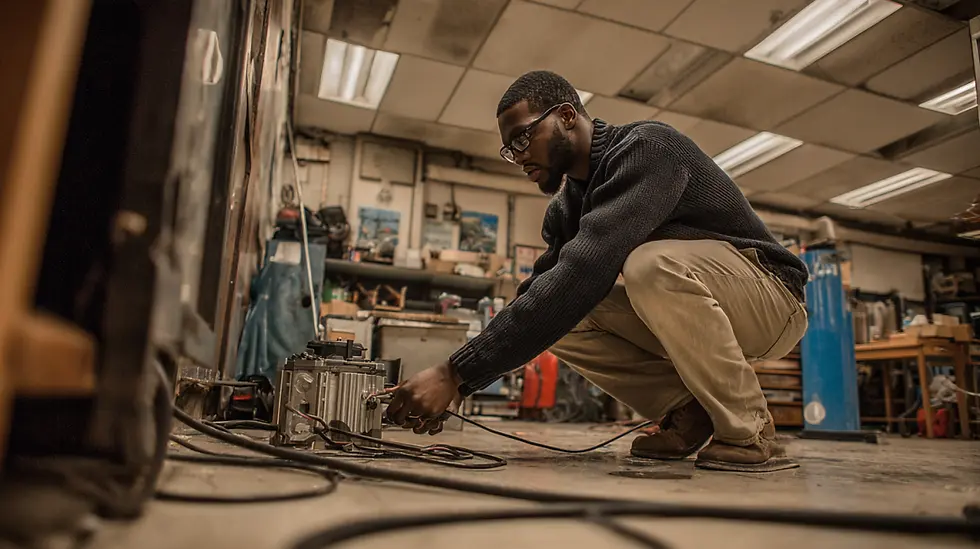
If you’ve been a CTE shop teacher for more than five minutes, you’ve probably heard something like:
“Hey, can you fix this chair?”
“Our golf cart won’t start — can your kids look at it?”
“The theater needs a ramp… could your class build one?”
“We have a broken door. Can Auto/Welding/Construction help?”
“We need signs made. Could Culinary…?”
(No. Culinary cannot make signs.)
Somewhere along the line, someone decided that shop teachers are the school’s repair crew — responsible for fixing whatever breaks, building whatever’s needed, and solving whatever problem pops up.
And here’s the truth:
That expectation is not fair, not sustainable, and not part of your actual job.
You run a classroom, not a maintenance department.
***
How This Happens (It’s Not Your Imagination)
Most people have no idea what CTE teachers actually do.
They see:
tools
equipment
machines
skills
hands-on work
And they assume:
“Great! You can fix everything!”
But they don’t see:
your curriculum
your safety protocols
your equipment checklists
your student certifications
your advisory committee requirements
your inventory
your grading load
your program reports
your shop management
your prep time disappearing
You’re already running a full operation.
Taking on extra repair projects steals time from your actual responsibilities.
***
The Hidden Cost of Doing Everyone Else’s Tasks
When shop teachers become the fix-it department, three things happen:
1. Your instructional time erodes.
Every “quick favor” costs minutes.
Minutes turn into hours.
Hours turn into days.
You lose:
demos
practice time
cleanup
reflection
relationship building
Your program isn’t protected when you're pulled in every direction.
2. Your students lose learning opportunities.
Random repair tasks rarely align with your standards.
They become:
distractions
one-off projects
unstructured tasks
Your kids don’t need busywork.
They need purpose-driven learning.
3. Your program becomes invisible.
When you’re fixing the school’s equipment, people assume that’s your “job.”
Nobody sees the curriculum, skills, certifications, or instructional design behind your work.
Your role gets minimized — not respected.
***
Teacher-to-Teacher Truth: You’re Allowed to Say No
Setting boundaries doesn’t make you difficult.
It makes your program stronger.
Here are practical ways to respond without burning bridges:
1. The Standards-Based Boundary
“I’d love to help, but this project doesn’t align with my course competencies. I need to prioritize the required skills for my students.”
This is professional and rooted in state expectations.
2. The Time Boundary
“Our instructional time is fully planned this month. I can’t add additional projects without impacting student learning.”
Clear. Respectful. Final.
3. The Safety Boundary
“This repair requires equipment or conditions that aren’t safe to run during class. I can’t take it on in this environment.”
Admin usually backs this immediately.
4. The Redirect Boundary
“That’s something maintenance handles — I recommend putting in a ticket.”
Because yes, maintenance exists.
***
And If There Is a Project You Want to Take On…
Some projects are worth doing.
Choose ones that:
align with your standards
teach industry skills
build student confidence
benefit your program
aren’t urgent
don’t derail your schedule
When the project fits the curriculum, it's a win.
Just remember:
You get to choose — not them.
***
You Teach Skills. You’re Not Free Labor.
You became a CTE teacher to:
teach
train
mentor
build pathways
prepare students for careers
You did not sign up to:
repair desks
fix golf carts on demand
rebuild the principal’s lawn mower
fabricate anything the school “needs” last minute
You’re a teacher, not a technician for hire.
When you protect your time, you protect your:
students
curriculum
program integrity
sanity
And that matters.



Comments