
The First 10 Days Will Make You — or Break You
- Steven Bross
- 3 days ago
- 3 min read

Updated: 2 days ago
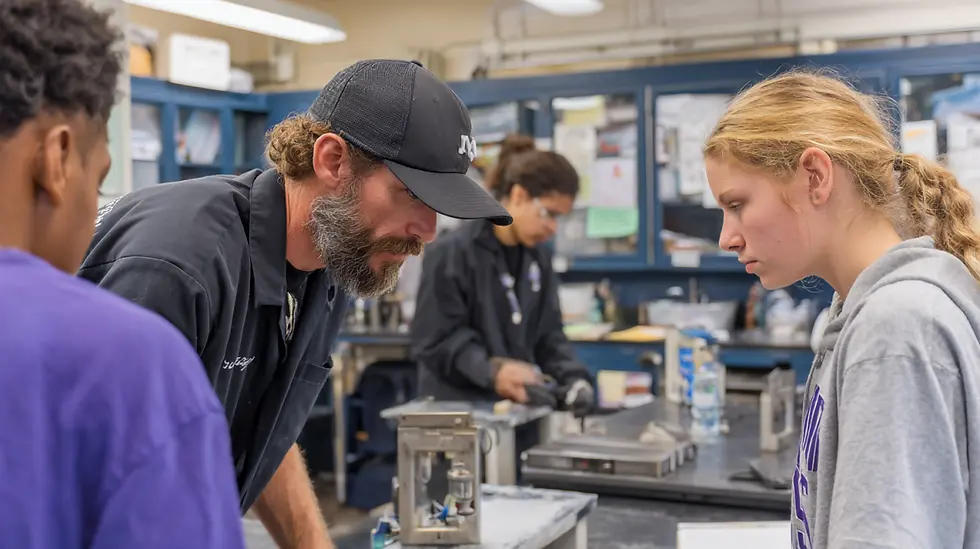
Every CTE teacher remembers their first 10 days — not because they were smooth, but because everything felt like it was on fire.
You have equipment you’re still learning, students who’ve never been in a lab, procedures that aren’t established, and a classroom culture that doesn’t exist yet.
And here’s the hard truth:
Whatever happens in the first 10 days becomes the norm for the rest of the year.
Students lock into routines quickly.
So do we.
And if we don’t build the right systems early, we spend the rest of the year putting out the wrong fires.
Why the First 10 Days Matter More in CTE
Most classrooms can ease into the year.
A slow start isn’t ideal, but it’s survivable.
Not in CTE.
A CTE shop, kitchen, garage, or lab has:
Safety risks
Expensive tools
Specialized equipment
Project expectations
Industry standards
Students who aren’t used to hands-on work yet
If your systems aren’t tight, predictable, and practiced, things get chaotic fast — and chaos in a CTE space is dangerous.
That’s why the first 10 days aren’t just “opening routines.”
They’re the foundation of your entire year.
The Mistake Most Teachers Make
New teachers (and plenty of veterans) think they need to start:
Teaching content
Running full labs
Delivering demonstrations
Introducing every tool immediately
But the truth?
The first 10 days aren’t about teaching content.
They’re about teaching your system.
You’re not prepping kids for projects — you’re prepping them for how your classroom works.
If you skip this step, you will spend the whole year reteaching procedures and managing behavior.
So What Should the First 10 Days Actually Look Like?
Here’s the baseline that works across every CTE program:
1. Teach the culture before the curriculum
Students need to know:
How we talk
How we move
How we work together
How we treat tools
How we reset spaces
Skills don’t matter if culture fails first.
2. Teach entry and exit procedures until they’re muscle memory
These two routines control:
Focus
Safety
Transitions
Cleanup time
Student mindset
If students can’t enter the room well, they won’t work well.
3. Practice safety and tool routines as their own lessons
Don’t rush the fun stuff.
Practice:
How to stand
Where to watch
How to pass tools
How to store equipment
What to do when something breaks
These routines prevent the biggest headaches later.
4. Build relationship equity ASAP
Students follow teachers they trust.
You don’t need a trust-fall activity.
You just need:
Names
Eye contact
Shared stories
A little humor
A moment where each kid feels seen
A connected room is a safe room.
5. Hold firm, kind boundaries early
Boundaries aren’t about control — they’re about clarity.
Students test early.
They want to know you’re consistent.
If you let small things slide in the first week, it becomes your classroom rule forever.
Teach the boundary early.
Reinforce it kindly.
Stay consistent.
What Happens When You Nail the First 10 Days
Your year gets easier.
Students know:
What to do
How to do it
Where to go
How to behave around tools
How to ask for help
How to treat the space respectfully
Most “behavior issues” disappear when systems are strong.
Most “motivation issues” improve when students feel confident.
Most “time issues” dissolve when routines run themselves.
The first 10 days buy you freedom for the rest of the year.
And If Your First 10 Days… Weren’t Great?
This is important:
You can always reset.
Veterans do mid-year resets all the time.
You simply say:
“We’re going to tighten up our routines so our shop runs safer and smoother.”
Students adapt quickly when they know it’s for their safety and success.
Don’t wait for a disaster to reset a system.
Teacher-to-Teacher Truth
You don’t have to be perfect in the first 10 days.
You just need to be intentional.
A CTE classroom doesn’t become great by accident.
It becomes great because you design it that way — step by step, routine by routine, relationship by relationship.
And you don’t have to do it alone.



Comments